At 7:30 PM in downtown Seattle, public restrooms begin locking their doors. For unhoused women, trans youth, and non-binary individuals on the street, this daily curfew marks the beginning of an agonizing, undignified ordeal.
The Hidden Mechanics of Street-Level Hygiene
Period poverty in unhoused communities is not merely a financial inconvenience; it is a compounding health crisis. In traditional emergency shelters, menstrual supplies are frequently rationed—often limited to two or three low-grade pads per request—forcing residents to beg staff members repeatedly throughout the day.
When shelter supplies are exhausted, individuals are left with desperate survival alternatives:
- Using newspaper, folded toilet paper, socks, or shredded cardboard in place of sanitary pads.
- Leaving single tampons inserted for 24 to 48 hours to stretch scarce supplies, dramatically increasing the acute risk of Toxic Shock Syndrome (TSS), pelvic inflammatory disease, and severe bacterial vaginosis.
- Washing reusable garments in public park fountains or restaurant sinks under the constant threat of citation, harassment, or arrest.
The Dignity Kit: Engineering for Real-World Sanitation
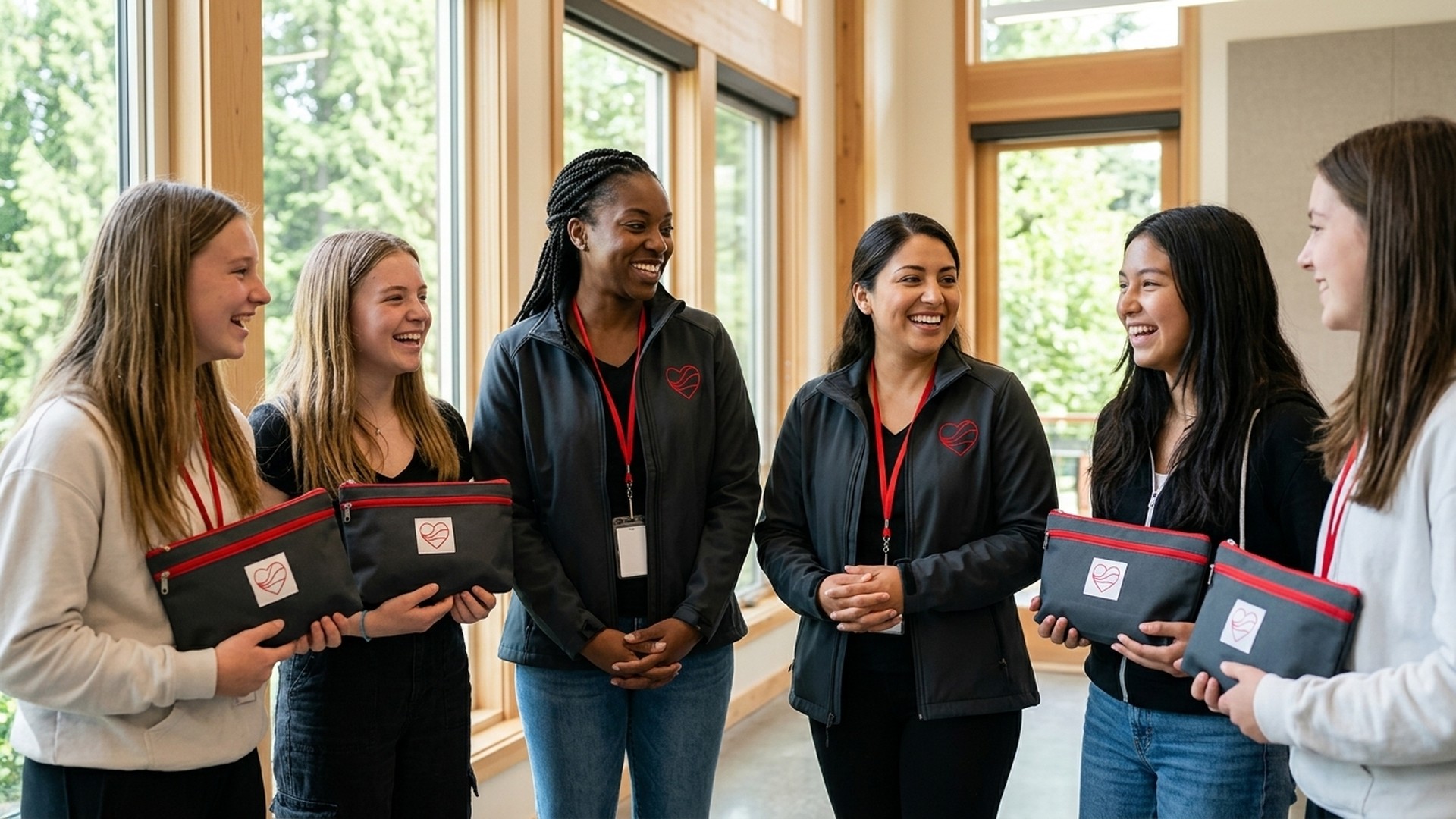
Through our frontline partnership with regional outreach vans and daytime resource centers, Love Her Period Foundation distributes weatherproof, sealed hygiene pouches specifically calibrated for street environments:
- Individually wrapped organic cotton pads and applicator-free tampons protected against damp weather.
- Hypoallergenic, pH-balanced intimate cleansing wipes that require no running water.
- Medical-grade disposal bags allowing discreet, sanitary waste management even when public trash bins are unavailable.
- Antiseptic hand wipes to ensure sterile handling prior to product insertion.
“When you hand someone a clean, beautiful, organic hygiene kit, you aren’t just giving them cotton and adhesive. You are looking them in the eye and telling them that their humanity is seen, valued, and fiercely protected.”
Ending period poverty requires reaching beyond institutional walls and meeting our unsheltered neighbors directly where they live with empathy, solidarity, and immediate care.