
She Shelf, a newly formed student organization at the University of Iowa, is working to end period poverty in the Iowa City community.
The group’s top priority is providing menstrual hygiene products to people in need who have a barrier, whether economic or sociocultural, to access. In the club’s Instagram bio, anyone can access their Amazon wishlist and purchase items for them to donate.
The club’s president and founder is third-year psychology and pre-law track student Sofia Korasick. With a lifelong passion for reducing the stigma around periods and wanting every woman to have what they need, she decided to do something about it in her community.
“Growing up as a woman myself, I’ve noticed how it’s very stigmatized, and I don’t love that for women as a whole,” Korasick said. “Let alone women who do not have access to these products, so that just makes it even more difficult for them to get what they need.”
She has been volunteering at The Salvation Army of Johnson County for over two years. While working in their soup kitchen, she noticed that women, often mothers, made sacrifices to meet the needs of others. Sometimes if they couldn’t afford food and menstrual products, they would choose food to make sure their family was fed.
According to the global nonprofit PERIOD, in the U.S., two in five adults and one in four youth struggle to afford period products.
“It didn’t sit right with me that we prioritize food over women’s health because to me, they’re of equal importance,” Korasick said. “This is necessary for women to live healthy, happy, comfortable lives.”
So she began by buying tampons and pads to donate to The Salvation Army. She then had the idea to make it a bigger thing and participate in fundraisers to get more menstrual products, but she did not see any groups she could join.
So, Korasick made her own.
Last summer she filled out the paperwork and registration needed to start the student organization. After it was accepted, she created the club’s Instagram page, “sheshelf_iowa,” and recruited members.
As she formed the executive board, it was important for her to get people who were not just capable of carrying out their duties, but also had genuine hearts.
“I’m very, very proud of our executive board,” she said. “They’re some of my best friends and some of the most not only qualified, but compassionate women.”
Going into the engagement fair and early meetings for the student organization, Korasick said she had few expectations. But she was pleasantly surprised to see the Instagram page’s growing success and to be surrounded by students who are just as passionate about women’s health and each other.
“Off the bat, it was such a community, and there was so much fellowship,” she said.
Korasick was especially excited to see students with previous experience in the sector or related areas join the club. She hopes everyone will learn from each other.
“I honestly hope people join our organization that know more than me. I want to learn more,” she said. “I’ve done some research on this, but I am by no means an expert on feminine hygiene products, and I really want to create an environment where people can bring their knowledge, expertise, and compassion to the project.”
The club hosted its first period party in the Hawkeye Room of the Iowa Memorial Union on Oct. 12 from 5 p.m. to 7:30 p.m. With music playing and pink tablecloths and disco balls on the table, the party had a bright and welcoming atmosphere. At the event, attendees socialized, enjoyed snacks, brought period product donations, and made period packs to donate.
Members use the donations to split among daily packs for women to pick up for free at She Shelf locations. Each period pack contains three tampons, one or two pads, an encouraging hand-made note, and a piece of candy in a small, shimmery pink bag.
Fourth-year art history major Caroline Börk is the creative director for She Shelf. She designs the website and flyers for the organization. She said her role allows her to use her artistic skills to promote a cause she believes in.
Börk believes the period packs are a dignified way for women to get what they need in a secure place. She said the people at the Salvation Army gave them good feedback on their donations, and they liked the idea of the individual daily packs for people to pick up during their visits.
Currently, the only She Shelf is at the Salvation Army in Iowa City. Korasick has an upcoming meeting this week with another potential place to put up a She Shelf; she hopes to have four locations by the end of the semester.
For Korasick, it is important to get a steady inventory going so she can consistently restock the locations every week.
“What’s worse to me than a place never having a She Shelf is a place having a She Shelf but then one day a woman who has been depending on it goes, and there’s nothing there,” she said. “That actually keeps me awake at night. I don’t want that to happen.”
In addition to the donations being consistently available for people who need them, Korasick wants high-quality products available. With research finding lead and other chemicals in tampons, the president aims to get more organic products to provide women with products that, hopefully, have less harmful materials.
“I’m never going to say no to a donation,” she said. “But I want to shed light on the fact that just because somebody is facing a barrier in which they don’t have access to period products does not mean they should then be subject to worse products.”
First-year student Haiden West first heard of the student organization at the engagement fair in Hubbard Park, and she chose to join because she liked the flyers and their mission.
“I think period products should be accessible to everyone,” West said. “I understand that a lot of people can’t get that stuff, and I think it should be free.”
• Continuous Period Equity Wire
Curator’s Note & Original Source
Love Her Period Foundation curates and republishes verified reports, policy milestones, and field updates to elevate national awareness and community action. Read the full investigation and verified reporting directly on the original publisher’s platform.
Take Action in Washington State
Period poverty affects 1 in 4 students and unhoused individuals across the Pacific Northwest. Help us distribute 100% certified organic hygiene care kits directly to schools, shelters, and community hubs.
A doctor's mission to end period poverty in China – Modern Ghana
A doctor’s mission to end period poverty in China Modern Ghana Verified Industry Dispatch • Continuous Period Equity Wire Curator’s Note & Original Source Love Her Period Foundation curates and republishes
Period Positive Workplace Initiative Celebrates Milestone
400+ businesses, in 62 countries, reaching almost half a million employees across the globe! Last month, the Period Positive Workplace (PPW) initiative celebrated an important milestone: over 400 businesses in
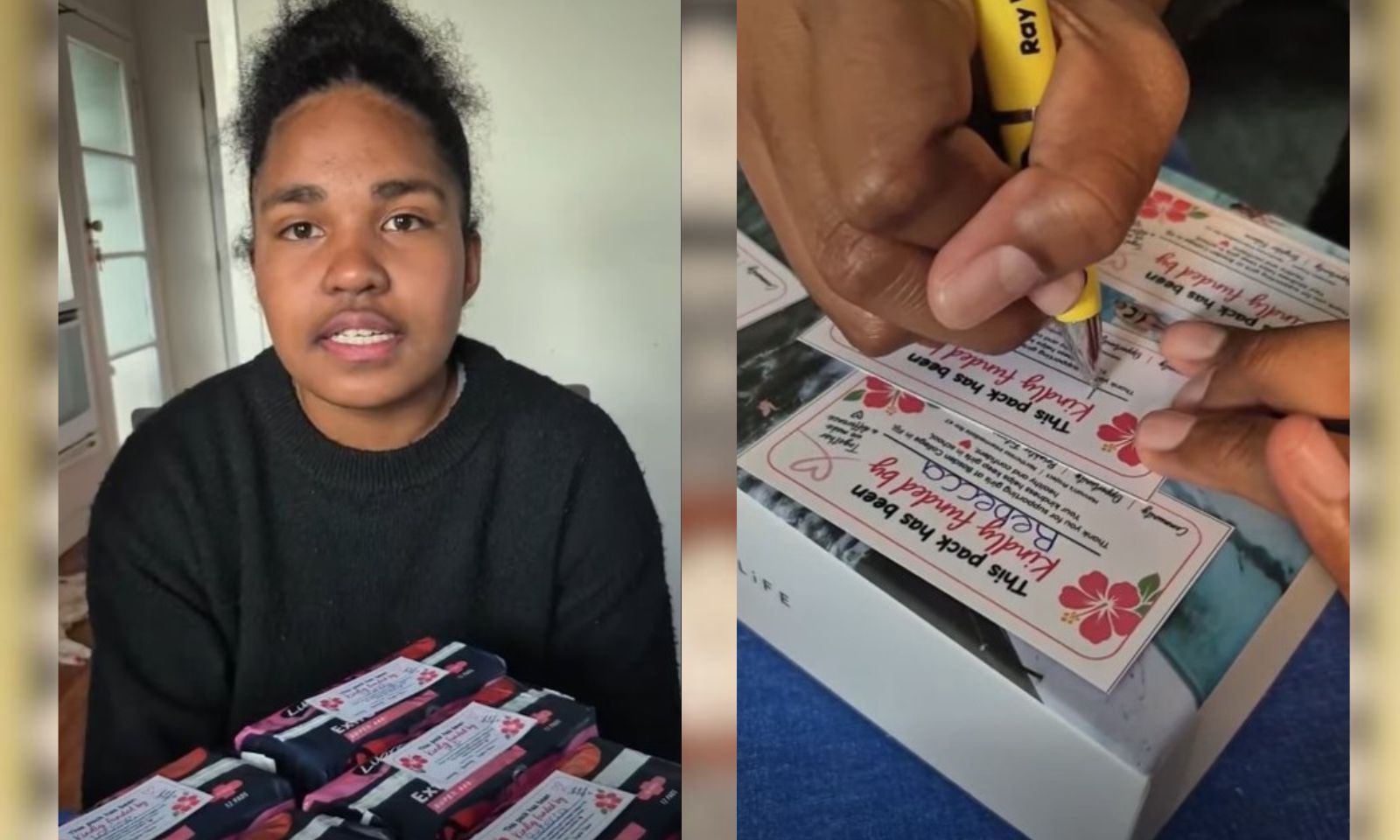
Auckland teen turns a trip to Fiji into a mission to fight period poverty
A trip to Fiji showed teenager Hannah Ganivatu how the cost of something as basic as sanitary pads can affect girls’ lives. Now, the 13-year-old student at Northcross Intermediate in